
Ancient myths and legends in the depths of history
In ancient European myths, the elder tree is considered the home of spirits and goddesses. The primal goddess was given the name Elder Mother. In Germany, she is known as ‘Frau Holle’ (in Grimm's fairy tales), and in Denmark, she is called 'Hylde Moer.'
In almost all European myths, she is an ambivalent figure - in some stories she is a wise healer, in others a demonic figure.
The myths surrounding ‘Frau Holle’ (also known as Holda, Perchta, Elder Mother, old Lady) are among the oldest legends in Europe and can be traced back to pre-Christian, Germanic, and possibly even Indo-European times. There are similarities to other Indo-European goddesses of fate and spinning, such as the Norns (Norse), the Moirai (Greek), or Mokosh (Slavic). This connection suggests that the myth could be at least 3,000–4,000 years old.
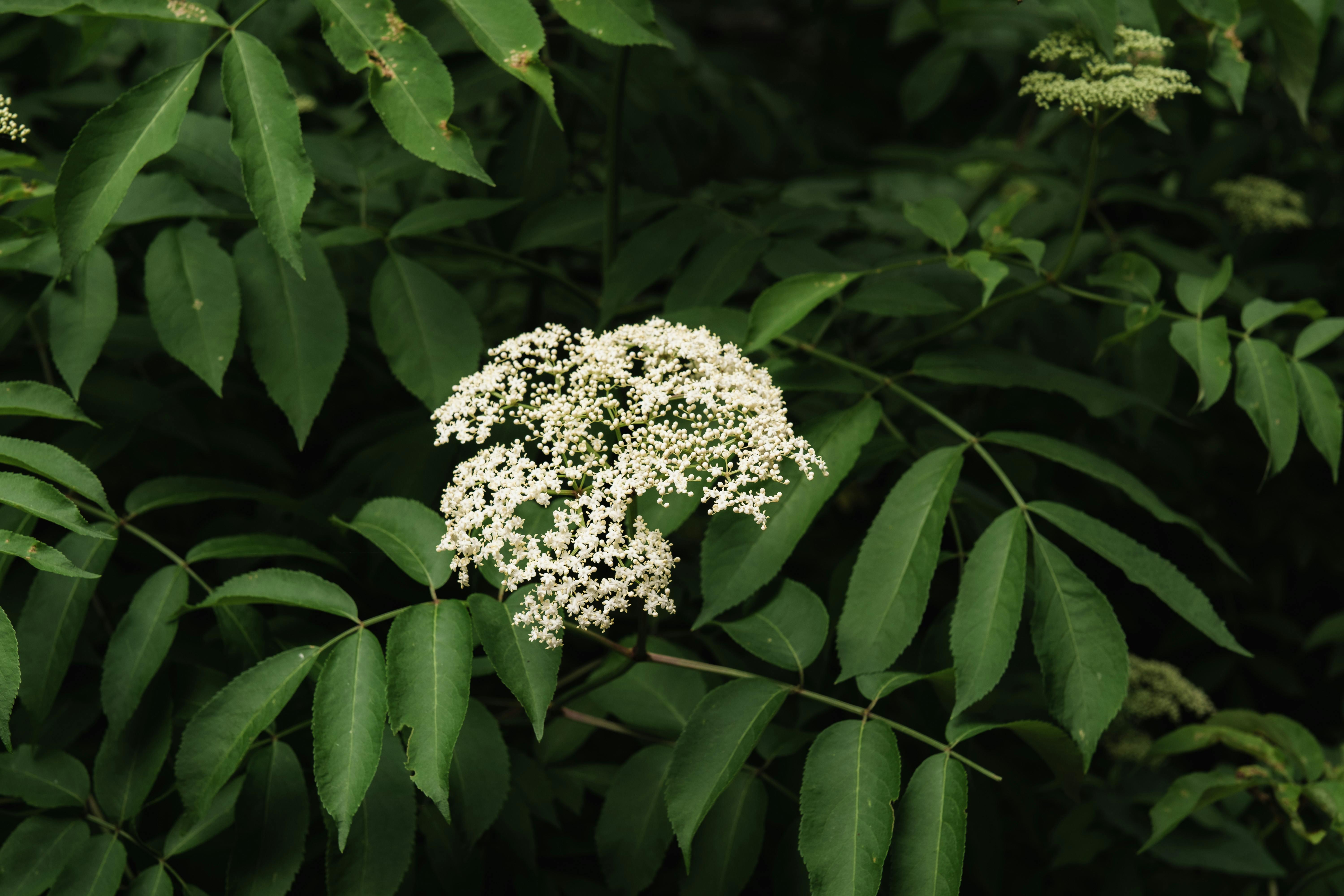
 In Scandinavian and English folklore, ‘Hylde Moer’ (Elder Mother) lives in the tree. Romani people believe burning elder wood brings bad luck. Elder branches above the door ward off evil spirits, vampires (in the Balkans), and witches. In England, elder branches were stuck in stable doors to protect livestock from bewitchment. Wearing the berries is said to protect against the ‘evil eye’. In Wales, it was believed that a flowering elder tree attracts spirits – especially the ‘Tylwyth Teg’ (fairy-like creatures). Elder wood was never used for furniture because it ‘brings bad luck’ – but it was used for magical flutes in Danish legends. Elder is also considered the gateway to the underworld in many stories. In some Germanic stories, she is said to be part of the Wild Hunt, or even to have led it.
Elder is both protective and dangerous – a tree of the mother goddess, but also of the dead. Those who treat it with respect receive blessings; those who disregard it attract curses.
Elder is, or was, an important medicinal plant in Europe. Flower tea is used to treat fever (known in Germany as ‘Fliedertee’). The jam strengthens the immune system (still used today in ‘elderberry syrup’).
Fun fact: A wand made from the branch of an elder tree plays a pivotal role in the final book of the Harry Potter series, which was almost named Harry Potter and the Elder Wand.'
Here and now—my Thé Sureau story
 As the scion of a globally connected family whose name is believed to date back to the fourth musketeer of King, D'Artagnan de Batz-Castlemore, I found my youthful inspiration for school and leisure time while roaming the fields, forests, and meadows of the Kraichgau, a small-town, village-like region whose extremely fertile soil was based on the remains of prehistoric seas known as “shell limestone.”
Between the lush beet, corn, and wheat fields, I found numerous fruit-bearing trees in the hedges typical of this area, which were planted to prevent wind erosion of the valuable topsoil. No one seemed to be interested in them, even though in some years they were so heavy with fruit that they hung down to the ground, despite the severe damage caused by the farmers' heavy equipment.
I couldn't resist bringing a few samples home and showing them to my mother, who, coming from a line of female herbalists, immediately knew what they were. With the help of our Brockhaus, I was able to translate the family names into their scientific designations and began to research them.
Two species in particular caught my interest due to their vitality: Prunus spinoza and Sambucus nigra. At first, I avoided the unfriendly thorny blackberry bushes, as well as the large wild plums, which were often worm-eaten, and of course, the walnut tree, whose leaves and shells left brown stains everywhere. It was only decades later that I would understand how they all interacted with the rest of the biotope.
My adolescent ambition to add something of my own to my parents' established universe of flavours consisting of apples, pears, cherries, plums, currants, strawberries, and rhubarb led me to experiment regularly over the following years with fruit preparations made from Prunus spinoza and Sambucus nigra, known as sloe and elderberry. Due to its distinctive bitter compounds, the sloe was sidelined, while the elderberry promised certain success if it's sometimes abysmal, sometimes boring flavour profile was “spiced up” with herbs or other fruits.
After the birth of my own children, these experiences became relevant again when elderberry products were offered alongside carrot juice on the baby food shelf for a healthy complexion for the little ones. Even before weaning, I had put my parents' steam juicer to work and bottled elderberry juice. This first batch was flavoured with mint and intended as a vitamin supply for the harsh winter. In fact, our children soon filled their ice cube trays with it and enriched the neighbourhood children's world of enjoyment. Today, we offer this experience as elderberry-mint liqueur for adults.
The children grew up and began their studies, but meanwhile we had converted most of our private orchard to elderberry, whose harvests were looking for new uses, and at some point all private gift-giving opportunities for the elderberry-mint liqueur had been exhausted. At that time, we chose the most obvious option in a wine-growing region and put a berry mash into fermentation. Adding mint again seemed obvious, but we needed something “for mature adult tastes.” Having already tried it as a tea blend for breakfast, we took a chance and added a generous amount of green tea to the mash.
To beautify the façade, my father had once planted a Kiliansrebe vine from South Tyrol around my grandmother's house, which, due to the lack of southern Alpine sun, was expected to do nothing more than shade the walls with its large leaves. But things turned out differently: the invasive grape variety thrived magnificently and, year after year, provided more of its small sweet grapes for our family fruit basket. So history repeats itself, and with the experience, we gained from grape wine production back then, we started a multiphase berry wine production from elderberries.
No sooner had we established this as the goal of our curiosity and creativity than we lost all the plants around the house to a major attack by voles, who had apparently realized that our last remaining dog from the “children's break” had died. That was the starting point for our annual collection campaigns in fields, forests, and meadows. We noticed that elderberry seems to be an extremely unpredictable plant: despite previously being full of flower clusters, no berries can be found at harvest time, and where buckets of fruit could be found one year, only a dry stem remains the next.
Expecting that acquiring land would be impossible for agricultural outsiders like us, we began searching for a plot of land (“preferably overgrown or bushy”) where we could establish a solid home for the elderberry. In fact, we found a seller who was tired of waiting for the ongoing land reform and was happy to get rid of this “wasteland.” We quickly cleared the land and planted a few dozen young plants, not without sowing numerous mixed seeds to increase biodiversity. That's when climate change caught up with us in the form of a series of “summers of the century.”
 Meanwhile, the land reform authority became aware of our activities and confirmed the obvious increase in species as a big bonus point because, unbeknownst to us, part of the reform area would be closed to viticulture in the future and another part would be excluded from conventional cultivation as a species protection compensation area. However, both restricted areas would be usable for our special permaculture design under certain conditions, which offers an absolutely rare opportunity to establish a large, consolidated area for planting “wild elderberry.”
During periods of climate crisis failures, we were able to gain valuable experience in soil formatting. Parameters such as “water retention capacity” are fundamentally linked to soil fauna, which in turn is linked to the duration and intensity of mechanical cultivation. We have deepened these findings with scientific working groups on the topic of “agroforestry,” which was the focus of funding from various institutions during this period. We summarized the essence of the systems theory considerations of players, communication, and interaction in a presentation entitled “Permaculture is the Jazz of agriculture,” which will be given to local stakeholders in September.
Thrown back to the annual hand-picking of wild elderberries by the new climate realities, we set about expanding our product range. This resulted in various liqueur varieties, a robust elderberry vinegar, and a number of fresh mustard preparations in different flavours. In addition, several varieties of elderberry wine are resting in barrels, awaiting further processing into vinegar or sparkling wine. The production of sparkling wine is the responsibility of so-called contract bottlers, whose own special yeasts subject the delivered wine to carbon dioxide pressure in a process of bottle fermentation (Méthode Traditionelle) lasting several months.
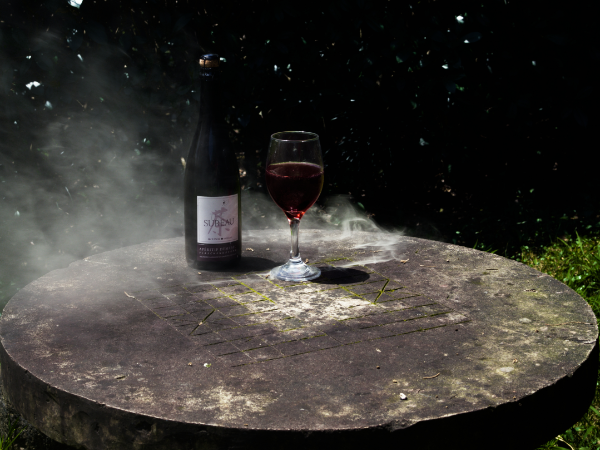
A little anecdote: Since we deliver undefined red wine without specifying the fruit of origin, our preliminary products are regularly assessed as Côté du Rhone, Bordeaux, or similar. This can probably be taken as a compliment to our skill in fermentation management.